Share This

Showing posts with label Health. Show all posts

Tuesday, April 7, 2026

Why nitric oxide is important for our health


Nitric oxide causes blood vessels to relax and dilate, allowing for more blood to pass through when needed. — Wikimedia Commons

Nitric oxide  (NO
) is a vital signaling molecule produced naturally by the body that acts as a vasodilator, relaxing and widening blood vessels to increase blood flow, improve oxygen delivery, and lower blood pressure. It is essential for cardiovascular health, erectile function, immune system strength, and regulating neurotransmission in the brain.
https://youtu.be/rY-ohQNFwuYhttps://youtu.be/QlMyjO6X7gQ?si=7PoJQ8hBz5EK_LSY<iframe width="560" height="315" src="https://www.youtube.com/embed/O4mUnFQafsY?si=HnpMUM12iBIvlEuO" title="YouTube video player" frameborder="0" allow="accelerometer; autoplay; clipboard-write; encrypted-media; gyroscope; picture-in-picture; web-share" referrerpolicy="strict-origin-when-cross-origin" allowfullscreen></iframe><iframe width="900" height="506" src="https://www.youtube.com/embed/rY-ohQNFwuY" title="The Science of Nitric Oxide | Consumer Health Animation" frameborder="0" allow="accelerometer; autoplay; clipboard-write; encrypted-media; gyroscope; picture-in-picture; web-share" referrerpolicy="strict-origin-when-cross-origin" allowfullscreen></iframe><iframe width="560" height="315" src="https://www.youtube.com/embed/O4mUnFQafsY?si=HwHE0QDSHmytaJfD" title="YouTube video player" frameborder="0" allow="accelerometer; autoplay; clipboard-write; encrypted-media; gyroscope; picture-in-picture; web-share" referrerpolicy="strict-origin-when-cross-origin" allowfullscreen></iframe>

Many of the chronic health challenges we face as adults in Malaysia now – like high blood pressure, diabetes, heart disease, fatigue, brain fog and sexual health conditions – are often treated as separate problems.

But from a health and long-term perspective of functional medicine and ageing, these problems that can apparently be separated from one another often seem to have a common denominator: declining blood vessel health.

Central to this process is the naturally-occurring molecule nitric oxide, which is responsible for circulation, metabolism, immune balance and healthy ageing.

Nitric oxide is a gas formed in the body that relaxes and widens the channels of blood vessels within the body – a process called vasodilation.

This basic action helps to ensure that oxygen and nutrients are delivered to all tissues in the body.

Even in very small amounts, nitric oxide has a huge impact on health.

It is typically considered in functional medicine to be a marker of vascular age as healthy blood vessels are crucial for determining how well the body functions over time.

Here is why nitric oxide matters to our health:

Heart disease and high blood pressure

Heart disease remains a major cause of death in Malaysia.

Many people assume that high blood pressure or heart disease are just a consequence of advancing age or genetic fate.

In fact, one major contributor to these conditions is endothelial dysfunction, in which the lining of a blood vessel loses its ability to produce adequate nitric oxide.

When nitric oxide levels are low, our blood vessels become stiff and inflamed, causing the heart to work harder and blood pressure to eventually rise.

The longer this goes on, the more likely you are to experience complications like heart attack and stroke.

Diabetes and metabolic syndrome

Nitric oxide also contributes to metabolic health, which has become an increasingly serious issue in Malaysia.

A sufficient level of nitric oxide assists in increasing cellular insulin sensitivity and aiding glucose to enter the muscles more effectively.

With decreased production of nitric oxide, insulin resistance and the occurrence of type 2 diabetes increases.

This vascular-metabolic connection explains why people with diabetes are at much higher risk for heart disease, and why the health of blood vessels is critical in long-term diabetes management.

> Ageing brains

Nitric oxide is crucial for brain health and cognitive longevity.

Reduced availability of nitric oxide is associated with impaired cerebral blood flow and a greater risk of neurodegenerative diseases, like Alzheimer’s disease.

The brain is exceptionally sensitive to changes in blood flow, and even small decreases in circulation can threaten memory, concentration and mental clarity.

From a lifelong perspective, sustaining healthy blood flow to the brain is the most critical means of preserving cognitive function and independence in old age.

Energy and stamina

Nitric oxide is closely related to a person’s energy level and physical stamina.

A lot of middle-aged and elder Malaysians say that they are easily fatigued, have low exercise resistance or take longer to recover after playing sports.

Although such symptoms are frequently ascribed to ageing, they often indicate diminished nitric oxide generation instead.

When blood vessels do not dilate properly, muscles get less oxygen for activity, leading to mild tiredness and slower recovery.

Supporting pathways through nitric oxide helps to preserve mobility, strength and vitality – key elements of healthy ageing.

Sexual health

Another important insight into nitric oxide status comes from sexual health.

Early indicators of the ageing of the vascular system often occur in men via erectile dysfunction and women via impaired sexual responsiveness.

Nitric oxide is critical for genital blood flow and normal sexual function, so trouble in that area often shows up years before more significant cardiovascular symptoms come about.

Thus, sexual health in functional medicine is conceptualised not just as an individual problem, but also as a window into overall cardiovascular and metabolic health.

Living longer

Nitric oxide production naturally decreases with age due to several key factors.

Sadly, Malaysia’s modern lifestyle aspects – i.e. physical inactivity, consumption of refined carbohydrates and ultra-process-ed foods, chronic stress, poor sleep, smoking, and chronic metabolic disease – only exacerbate this decline.

When the amount of nitric oxide drops, blood vessels become stiffer, inflammation rises and the body’s capacity for coping with stress decreases.

This accelerates biological ageing and raises the risk of various chronic diseases.

From a functional medicine and longevity standpoint, the idea is to not just treat disease once it starts, but also preserve nitric oxide levels over the course of a lifetime by promoting early and consistent production.

It requires that the body’s natural nitric oxide pathways be supported by lifestyle and nutritional approaches, rather than relying only on drugs for the treatment of late stage disease.

Some examples of nitrate-containing vegetables in Malaysia include:

  • Spinach (bayam)
  • Water spinach (kangkung)
  • Mustard greens (sawi)
  • Lettuce
  • Beetroot
  • Ulam-ulam (pegaga, selom, daun ketumbar).

These vegetables help to fuel the nitrate to nitrite to nitric oxide pathway, which depends on healthful oral bacteria.

This pathway may be blocked by excessive use of antiseptic mouthwash.

Regular physical activity, adequate sleep, stress management and so on are also important to reduce chronic inflammation and oxidative stress, which quickly destroy nitric oxide and decrease blood vessel function.

> Ageing healthily

Nitric oxide, in the context of healthy ageing, is much more than a cardiovascular molecule.

It says everything about health as a healthy circulatory system serves all organs in the body.

Sufficient nitric oxide is related to higher energy metabolism, higher cognitive function, better metabolic control, healthier sexual function and resilience with ageing.

By boosting nitric oxide production, people aren’t just adding years to life, but are maximising the quality of those years.

Clinically, nitric oxide provides a valuable model of why many co-existing chronic diseases are often clustered in the same individual.

High blood pressure, diabetes, fatigue, erectile dysfunction and cognitive complaints are often treated independent of one another, but tend to stem from the same underlying problem: vascular dysfunction with a reduced availability of nitric oxide.

In a clinical setting, signs such as low exercise tolerance, chronic fatigue or sexual dysfunction should not be dismissed as standard ageing.

These findings are frequently early indicators of compromised endothelial function and increased risk of cardiometabolic disease.

Early intervention in nitric oxide pathways can help clinicians to prevent irreversible damage before it happens.

Do note however, that functional medicine does not replace medical treatment; it is an answer to root causes, not a substitute for clinical care.

Medications are often needed when necessary and life-saving, but improved long-term health happens when lifestyle problems, nutrition, metabolic state, sleep and stress are treated in parallel with pharmacological treatment.

Providing interventions to support nitric oxide production and utilisation by vascular systems provide an opportunity to enhance vascular resilience and potentially reduce the burden of future disease.

For patients, the real message is empowerment.

The many factors that affect nitric oxide – physical activity, diet, gut and oral health, sleep quality and stress – can be changed.

Even modest and consistent changes can lead to significant improvements in circulation, vitality and overall health.

Preserving nitric oxide is ultimately about protecting the body’s internal highways that connect oxygen, nutrients and signals to every cell.

When these are kept open and flexible, the body ages more slowly, recovers more efficiently and stays in use for longer.

This is what longevity-led, preventive care is about.

Datuk Dr Nor Ashikin Mokhtar is a consultant obstetrician and gynaecologist, and a functional medicine practitioner. For further information, email starhealth@thestar.com.my. The information provided is for educational and communication purposes only, and it should not be construed as personal medical advice. Informa-tion published in this article is not intended to replace, supplant or augment a consultation with a health professional regarding the reader’s own medical care. The Star does not give any warranty on accuracy, completeness, functionality, usefulness or other assurances as to the content appearing in this column. The Star disclaims all responsibility for any losses, damage to property or personal injury suffered directly or indirectly from reliance on such information.

Related stories:


Wednesday, October 15, 2025

Be cautious, students told as influenza wave hits schools and kindies


Photo courtesy of Pexels

PETALING JAYA: With schools and kindergartens not spared from the current influenza wave hitting the country, the alert is out for children to take extra precautionary measures.

Health experts want special emphasis given to children as most cases have been detected in schools.

Public health expert Prof Dr Sharifa Ezat Wan Puteh called for the affected schools to be closed after being sanitised.

She said children with influenza-­like illness (ILI) symptoms should stay home, while those with severe acute respiratory illness (Sari) should seek treatment at the hospital.

ALSO READ:

“Children are also encouraged to get a flu jab. Annual vaccination is necessary because influenza viruses change over time and the vaccine is updated each year.

“The vaccine is suitable for individuals aged six months and older,” she said when contacted.

The Health Ministry has repor­ted a nationwide increase in ILI cases, with 97 clusters detected in the latest epidemiolo­gical week – a sharp jump from just 14 the week before.

CLICK TO ENLARGECLICK TO ENLARGE

Most outbreaks were recorded in schools and kindergartens, mainly in Selangor, Kuala Lumpur and Penang.

On Saturday, the ministry reminded that early treatment was important to prevent serious complications.

It said that while influenza was usually resolved without specific treatment, those who experienced symptoms such as fever, cough, sore throat, body aches or fatigue should seek medical attention, mainly children and those at high risk.

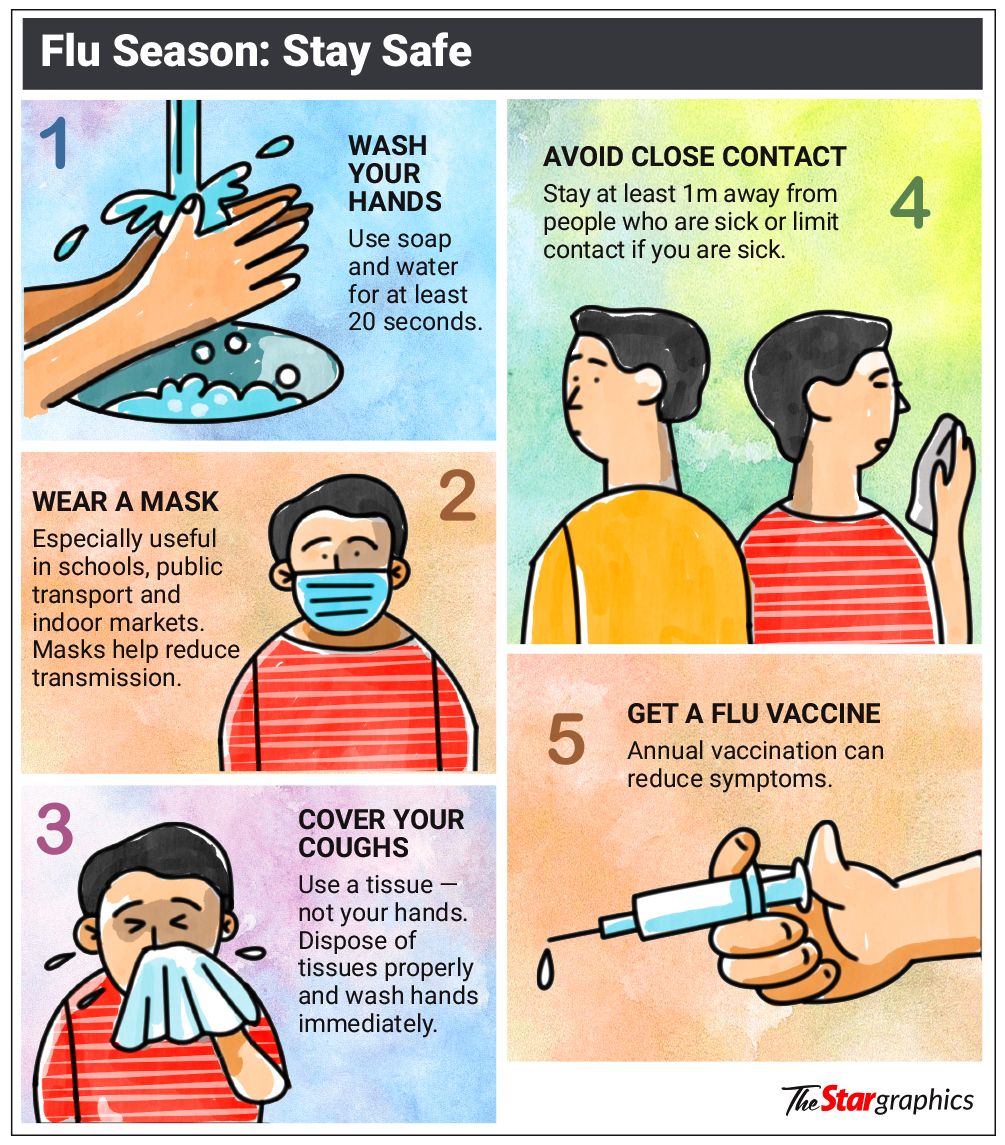
The ministry also urged the public to practise proper cough etiquette, maintain regular hand hygiene, avoid crowded places when unwell and wear face masks if they were symptomatic.

Health Minister Datuk Seri Dr Dzulkefly Ahmad said his ministry will discuss with the Education Ministry on further action to contain the spread of the virus in schools.

He also sought to reassure the public that the situation remained under control despite a concerning number of outbreaks.

Prof Sharifa Ezat, who is Univer­siti Kebangsaan Malaysia’s School of Liberal Studies dean, said high-risk groups in­­cluded the elderly, those with comor­bidi­ties, cancer patients and pregnant women.

She added that other groups, such as healthcare workers, teachers with high student load and those handling work which involves meeting a lot of people, should also mask up to protect themselves.

Malaysian Medical Association (MMA) president Datuk Dr Thiru­navukarasu Rajoo urged the public to take sensible precautions with cases of Influenza A and B continuing to rise nationwide.

He said the increase in flu clusters being detected by the Health Ministry was not unusual during this time of the year, but stressed that vigilance is key to preventing a further spread.

“Good hygiene remains our best defence – wash your hands frequently, cover coughs and sneezes and wear a mask if feeling unwell or in crowded areas,” he said.

Dr Thirunavukarasu advised those with persistent high fever, severe cough, chest discomfort or breathing difficulties to seek immediate medical attention, especially if symptoms did not improve after a few days.

President of the Association of Private Hospitals Malaysia Dr Kuljit Singh said the resulting increase in demand for flu vaccines is still manageable.

“We have stock from suppliers, despite the surge in cases,” he said, adding that demand for the jab usually goes up during the flu season.

Former Medical Practitioners Coalition Association of Malaysia president Dr Raj Kumar Maharajah also said there is enough stock of the vaccine at the moment.

“Many are coming in for vaccines due to the influenza outbreak,” he said.

Related stories:

Tuesday, September 30, 2025

Boosting your metabolic rate

“More than half of the body’s “More than half of 

INCREASING metabolic rates has been of interest to many, especially among weightconscious individuals. Understanding metabolism is crucial in guiding us to obtain an optimal metabolic rate. Metabolism is the conversion of energy intake i.e., food consumption into products including energy and waste products. Increasing the rate of conversion is believed to burn off body fat. But is this true?

MSU Medical Centre (MSUMC) health screening and wellness specialist Dr Faridah Mohd Zin explains, “Our body consumes energy in four pathways: basal metabolism, food thermogenesis, non-exercise activities thermogenesis (NEAT) and exercise activities thermogenesis (EAT). More than half of the body’s metabolism is used as basal metabolism, which supports the function of vital organs such as the heart, kidneys, brain and others (about 60%).

The thermic effect of food has the lowest contribution which involves the energy needed to change the food we eat into substances that are “edible” by our cells i.e., glucose (about 10%). Increasing the metabolic rate would mean increasing the energy-burning rate of the body which theoretically could be increased by optimising the NEAT, EAT, thermic effect of food and body metabolism.

NEAT is simply the energy consumed when performing daily activity. Optimising daily activities such as cooking while standing or pacing around the room while on the phone has been shown to increase metabolic rates. Since these activities will naturally be done every day, enhancing the energy burned through this pathway could be regarded as an opportunity that should not be missed. Moreover, NEAT is found to be associated with improvement in overall health and helps in body fat reduction.

EAT is the body’s energy consumption through structured exercise which primarily includes cardiovascular, strengthening, flexibility and balance. Furthermore, each type should have specific criteria in terms of frequency, intensity, time and types (FITT approach) to achieve different exercise objectives. For example, in maintaining fitness, a total of 150 minutes of cardiovascular exercise per week is recommended while a longer duration is needed for body weight reduction.

Food thermogenesis contributes the least to body energy consumption. High lean protein and whole food use more energy in the metabolism compared to other types of food and processed food. Although eating the former would induce higher thermogenesis hence a higher metabolic rate, the contribution made in the increment of daily body metabolism is the lowest.

The major factors contributing to the basal metabolic rate include sex, height, age, ethnicity, body composition and genetic factors. While the body compositions are mainly composed of the vital organs, bones, body fat and muscle mass, the latter two are the only factors that can be intentionally changed.

Total body fat is composed of essential and storage fat. Storage fat is mainly deposited under the skin as subcutaneous fat, or around the body organs as visceral fat. The latter has been strongly linked to an increased risk of cardiovascular diseases including heart attack and stroke. Energy consumption of more than required would be stored in the body as fat. Hence, a negative balance between energy intake and consumption is essential to force our body to use up the storage fat as a source of energy, leading to weight reduction. Since storage fat originates from food intake, altering an individual’s diet is crucial for achieving the desired body fat level.

Increasing muscle mass would increase the ability of the body to use up energy. The American College of Sports Medicine recommends regular resistance training exercises as the key to building and keeping muscle. Men and women should participate in muscle-strengthening activities that work the major muscle groups (legs, hips, back, chest, abdomen, shoulders and arms) at least two times each week. Examples of muscle-strengthening activities include lifting weights, using resistance bands, doing push-ups and some types of yoga. Even everyday activities such as gardening, playing with your kids and carrying groceries can strengthen muscles.

Although resistance training is an important part of a complete exercise regimen, consuming the appropriate amount and type of protein to maintain and build muscle is just as important. On top of that, a healthy balanced diet is crucial to ensure adequate macroand micro-nutrients needed for a healthy body.

Body metabolism happens continuously, allowing ongoing opportunities to maximise its effect. Body fat is a way for our body to store unused energy. Hence, optimising the body’s metabolism while consuming less than the daily energy requirement will force the body to burn stored fat for energy. Consistently maintaining this negative energy balance will gradually reduce unwanted fat.

Saturday, August 30, 2025

Unhealthy sleep patterns


Here are six signs that your sleeping pattern is out of whack, and how to improve it.

T0ssing and turning throughout the night, even if you're not really conscious ot it, it is a sign of poor sleep

WE all experience the occasional late night or restless sleep, but when these nights become frequent, it can begin to take a toll on your health and overall well-being.

Britain’s The London General Practice sleep and circadian rhythm specialist Dr Katharina Lederle has outlined six key signs that indicate that your sleep pattern may be offbalance.

She has also shared some helpful tips and tricks on how to reset your routine to help you wake up feeling refreshed.

1. Waking up in the night

Frequently waking up too early or having regular interruptions during the night is a clear sign that your sleep has been disrupted.

“Waking up and going to the toilet once and then falling back asleep within a couple of minutes is fine, but if you are having a lot of toilet trips or just think ‘why have I been awake for such a long period of time’, and then struggle to get back to sleep, that suggests there might be a problem,” she says.

2. Restlessness

“If it takes you longer than 30 minutes to get to sleep on a regular basis, there could be an issue.

“One sign of poor sleep is restlessness – tossing and turning at night,” she says.

“You might not necessarily wake up fully and think I have been tossing and turning a lot, but the next day there may be an awareness of restlessness.

“Or if you have a sleeping partner, they might comment on your restlessness during the night.”

3. Busy mind

A busy mind can be a symptom of a poor sleep schedule, and vice versa.

“Stress can psychologically lead to busy thoughts – worrying about the future and replaying scenes from your day – which can make it harder to get to sleep,” says Dr Lederle.

“Stress can also physiologically lead to raised cortisol levels and a raised heart rate.

“However, what we actually want/need for sleep is the exact opposite. We need relaxation to allow ourselves to let go of everything.”

4. Low mood

Feeling low or down during the day can be another indication that your sleep pattern has been disrupted.

“The resources in the brain are all finite and need to be rebuilt.

“So, if your prefrontal cortex [which plays a crucial role in executive functions and higherorder cognitive processes] is sleep deprived, it can’t fulfil its regulatory role,” explains Dr Lederle.

“This often results in low mood, anxiety and irritability, which can then quite quickly lead to conflict or disagreements.”

5. Struggling to focus

“A lack of motivation and struggling to concentrate are some more signs of disrupted sleep that you may notice during the day,” she says.

“When the prefrontal cortex

nd hasn’t had the chance to rebuild all its resources, concentration can become hard.

“Seeing the bigger picture, attention to detail and switching attention intentionally can also become harder.”

6. Excessive tiredness

Feeling excessively tired throughout the day is likely to be a sign of disrupted sleep or accumulated sleep debt.

“Waking up and still feeling tired and groggy is sleep inertia, which we all experience to some extent.

“But if you repeatedly feel excessively tired without an

explanation, that could indicate a bigger problem,” says Dr Lederle.

Reset your routine

Here are some strategies to help your sleeping pattern get back on track:

>Expose yourself to light in the mornings

“When you wake up in the morning, let the light in and go outside,” she recommends

> Make your bedroom room dark and cool in the evenings

“Try to keep your sleeping environment quiet, dark and cool,” she advises.

Go to bed and wake up at regular times

“It’s okay to have some late nights when we go to the theatre or to a party, but on the whole, it’s important to keep your sleep and wake times as regular as possible,” says Dr Lederle.

Expose yourself to light in the mornings

“When you wake up in the morning, let the light in and go outside,” she recommends. > Make your bedroom room dark and cool in the evenings

“Try to keep your sleeping environment quiet, dark and cool,” she advises.

Think about what might be causing your stress

“Identify where your stress is coming from and think about what you can control,” suggests Dr Lederle.

“Think about: how can I recover? How can I let go of my work? How can I relax? How can I get a sense of autonomy or control?”

Engaging in an activity you enjoy before bed can provide a sense of autonomy and control, which may help lower your stress levels and help you drift off to sleep.

“It could be that your goal is to meditate and you start with doing five minutes every evening,” she says.

>Adjust eating times Stay active Seek help

“Eating late or eating sugary foods before bed can impact people’s ability to fall asleep,” she says.

“The general rule of thumb is to try and eat dinner at least three or four hours before you go to sleep.

“Having caffeine in the evening, or drinking too much during the day, can also make it harder to fall asleep.”

>Stay active

“Make sure you are moving throughout the day and try to avoid sitting on a chair for hours on end,” says Dr Lederle.

“Try to do some exercise to help release tension and stress from the body.”

“If we have a stressful event, it’s quite normal to have poor sleep.

> Seek help

“But if you are struggling to sleep for more than two weeks, start to think about what might be impacting your sleep,” she says.

“Then if your sleep hasn’t resolved after that, I would suggest speaking to a specialist.” – PA Media/dpa

By CAMILLA FOSTER