Share This

Thursday, January 22, 2026

View the ‘shocking’ university ranking with composure


Photo: VCG


The newly released "Leiden Rankings" from the Netherlands has recently drawn widespread attention. Eight of the world's top ten universities on the list are from China, with Zhejiang University ranking first, while Harvard University of the US - long a fixture at the top - fell to third place. The results sparked intense discussion. The New York Times published an in-depth analysis under the headline Chinese Universities Surge in Global Rankings as US Schools Slip, while France's Le Monde reported on January 20 that the ranking had triggered widespread shock, noting that the rise of Chinese universities has made the West less certain of itself. How should one view this "shocking" ranking? Our answer is simple: with composure.

First, the ranking does reflect, to a considerable extent, China's advances in education and science and technology. The Centre for Science and Technology Studies at Leiden University in the Netherlands, which publishes the ranking, is highly respected in the global field of scientometrics. The ranking focuses primarily on research output in high-impact international academic journals. Chinese scholars have ranked first globally for years in both the volume of SCI-indexed papers and citation counts. Judged by these criteria, it is hardly accidental that Chinese universities occupy eight of the top ten positions. In 2025, China's research and development (R&D) spending intensity reached 2.8 percent, surpassing the average of economies in the Organization for Economic Co-operation and Development (OECD) for the first time. The rise of many Chinese universities in the rankings is therefore a natural outcome of China's long-standing commitment to the strategy of invigorating China through science and education, coupled with sustained increases in research investment.

Most of the Chinese universities ranked in the top ten are research-oriented institutions with strengths in science and engineering, such as Tsinghua University, Zhejiang University, and Shanghai Jiao Tong University. What the ranking effectively "captures" is the growing competitiveness of China in fields such as electronic communication, materials science, physics, and chemistry. From Huawei's 5G technologies to the Tianhe supercomputers, and to the quantum satellite "Micius," Chinese university research teams have played a direct, critical, and in-depth role behind these achievements. The continuous flow of innovation generated by Chinese universities has been a powerful driver of China's transition from a major manufacturing country to a major science and technology power.

However, it is important to remain clear-eyed about the limitations of this ranking, which has a distinct focus - or preference. It places greater emphasis on universities' performance in academic research publications, reflecting only part of the picture rather than the whole. Judged by more comprehensive indicators, the more widely recognized global university rankings remain the QS World University Rankings, the Times Higher Education World University Rankings, and ShanghaiRanking's Academic Ranking of World Universities. In these rankings, universities from the US and the UK continue to dominate the top tiers. In terms of research originality, global talent attraction, and employer reputation, established Western universities still enjoy advantages. These gaps also serve as a reminder that the overall strength of Chinese universities - particularly their capacity to translate integrated technologies into real-world applications and their models for cultivating innovative talent - still has room for further improvement. 

Even so, in early 2000, the same Leiden Ranking still had seven US universities among the top 10, while Zhejiang University only made it into the top 25. Today, although Harvard produces even more research than it did back then, it has slipped to the third place. Given the progress made by Chinese universities over the past two decades, it is hardly difficult to understand why Western media might feel "shocked." This ranking has overturned many long-held perceptions. In fact, Chinese universities did not seize the spotlight "overnight." In recent years, from advances in basic research and breakthroughs in frontier technologies to leaps in strategic industries, China's scientific and technological rise has long been visible to the world. As universities serve as a "reservoir" for scientific and technological development, it is only natural that higher education institutions have made corresponding gains.

As for some Western media outlets linking the Leiden Ranking to narratives of "shifting power" or even a "new world order," this is an overreaction. Behind such "shock" lies Western anxiety over the erosion of technological hegemony. In reality, the progress of Chinese universities does not imply the failure of the West; rather, it represents a "collective increment" in humanity's overall creation of knowledge. From Harvard's liberal education to Stanford's entrepreneurial incubation, drawing on advanced educational philosophies from developed countries has itself been part of the progress of Chinese universities. At a time when global knowledge cooperation is becoming ever more closely intertwined, only by breaking free from zero-sum thinking can humanity's scientific enterprise advance together.

In a sense, the Leiden Ranking is like a mirror, reflecting both our achievements and our shortcomings. Every year, many Chinese students cross oceans to pursue their studies, with venerable Western institutions such as Harvard and Oxford remaining their "dream schools." We also hope that in the future, more international students will come to regard Chinese universities as their own "dream schools" and choose to study in China. That would be a far more persuasive kind of "ranking." 

 Global Times editorial

Tuesday, January 13, 2026

Mandarin, a good lesson for the future


SHAH ALAM: It’s a common wish list for non-Chinese parents who send their children to Chinese schools.

“I want her to learn and converse in Mandarin,” said Megat Azri Hakim Sazali of his daughter Puteri Humaira Rose, seven, who is enrolled at SJK(C) Ladang Regent, Elmina, here.

In fact, he had been preparing her for the past three years by sending her to a Mandarin-medium kindergarten.

“This means that she would not face a ‘culture shock’ when attending school.

“The kindergarten prepared her well. She was given a lot of homework even then!”

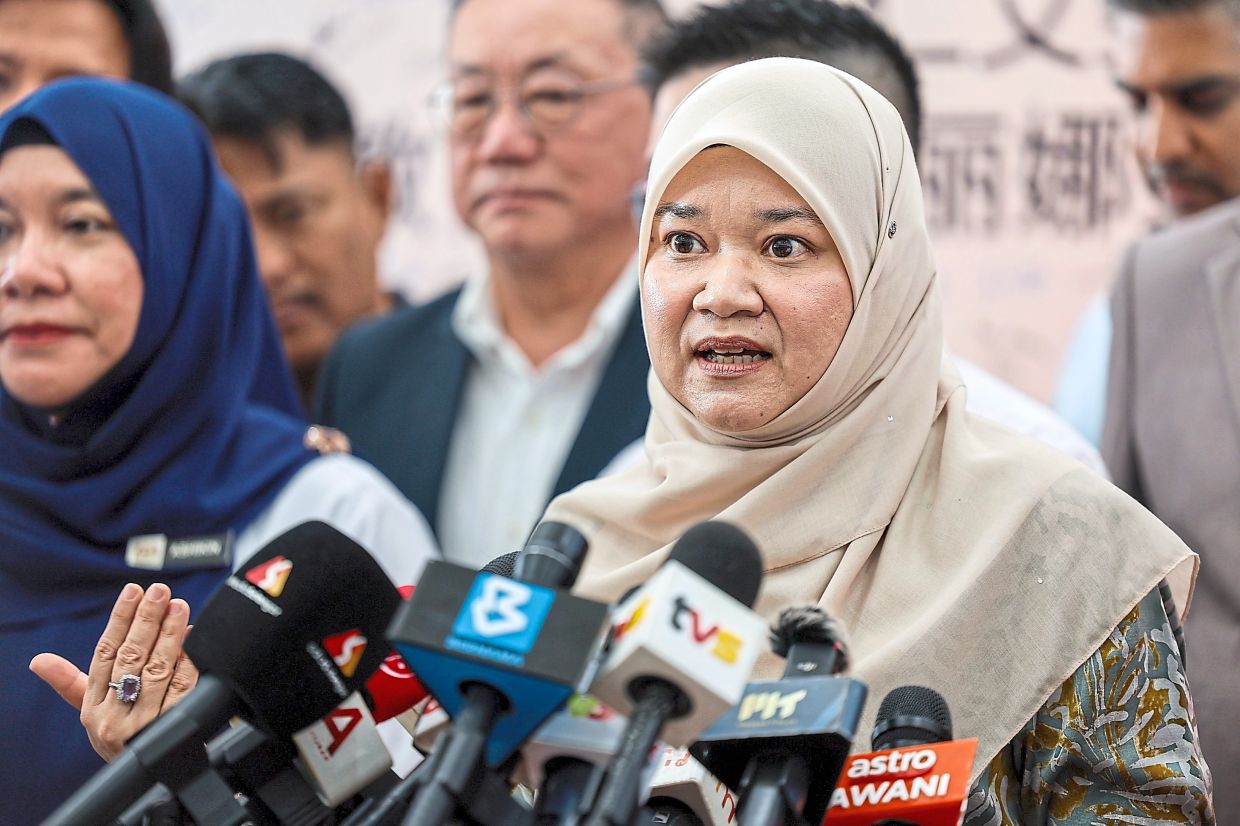
Exam review: Fadhlina says the ministry will consider parents’ views on the abolition of UPSR and PT3, as well as Classroom-Based Assessment performance levels, in its review on reinstating the two national exams. — BernamaExam review: Fadhlina says the ministry will consider parents’ views on the abolition of UPSR and PT3, as well as Classroom-Based Assessment performance levels, in its review on reinstating the two national exams. — Bernama

Another parent, Mohd Azwan Mohd Noor, said it was important for him that his three daughters – nine-year-old twins and an eight-year-old – could converse in Mandarin.

“China is now a powerful economy in the world. Being able to converse in Mandarin would be an advantage,” he said.

Another important factor is that Chinese schools attract a mix of students from different races, he added.

For Shakilla Khoriri, the chance to educate her daughter in Man­darin was too good to pass up.

She wanted her daughter Nurul Ameena Sofia Muhd Hafizudin, seven, to embrace the discipline practised in Chinese schools.

“Children nowadays are growing up in a different world, one where if we as parents are not careful, they will get ‘lost’,” she said.

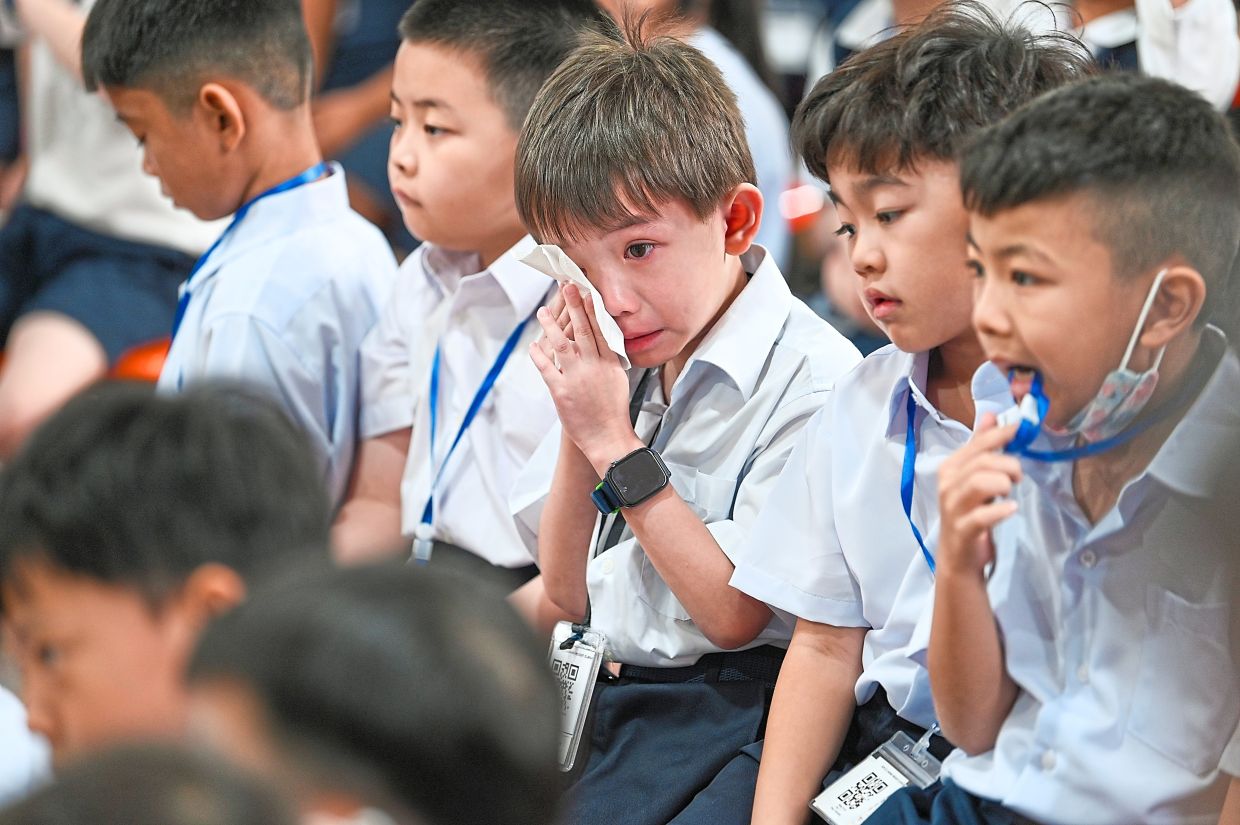
First-day nerves: A pupil crying on the first day of school at SJK(C) Ladang Regent, Elmina. — IZZRAFIQ ALIAS/The StarFirst-day nerves: A pupil crying on the first day of school at SJK(C) Ladang Regent, Elmina. — IZZRAFIQ ALIAS/The Star

“I want my daughter to interact and pick up the good habits of the students in Chinese schools.

“At the same time, she would be able to converse in Mandarin with them.”

Shakilla had earlier intended to send her daughter to a private school, which was further away from their home.

“But when I heard that a Chinese school was opening up here, I immediately enrolled (her),” she said.

Another parent, Krishnaveni Janardanan, said it was her husband who suggested that their daughter attend a Chinese school.

She said the ability to speak fluent Mandarin opens up nume­rous opportunities in today’s working world.

“Lucky for us, the government had opened a Chinese school here in Elmina where I live,” she said.

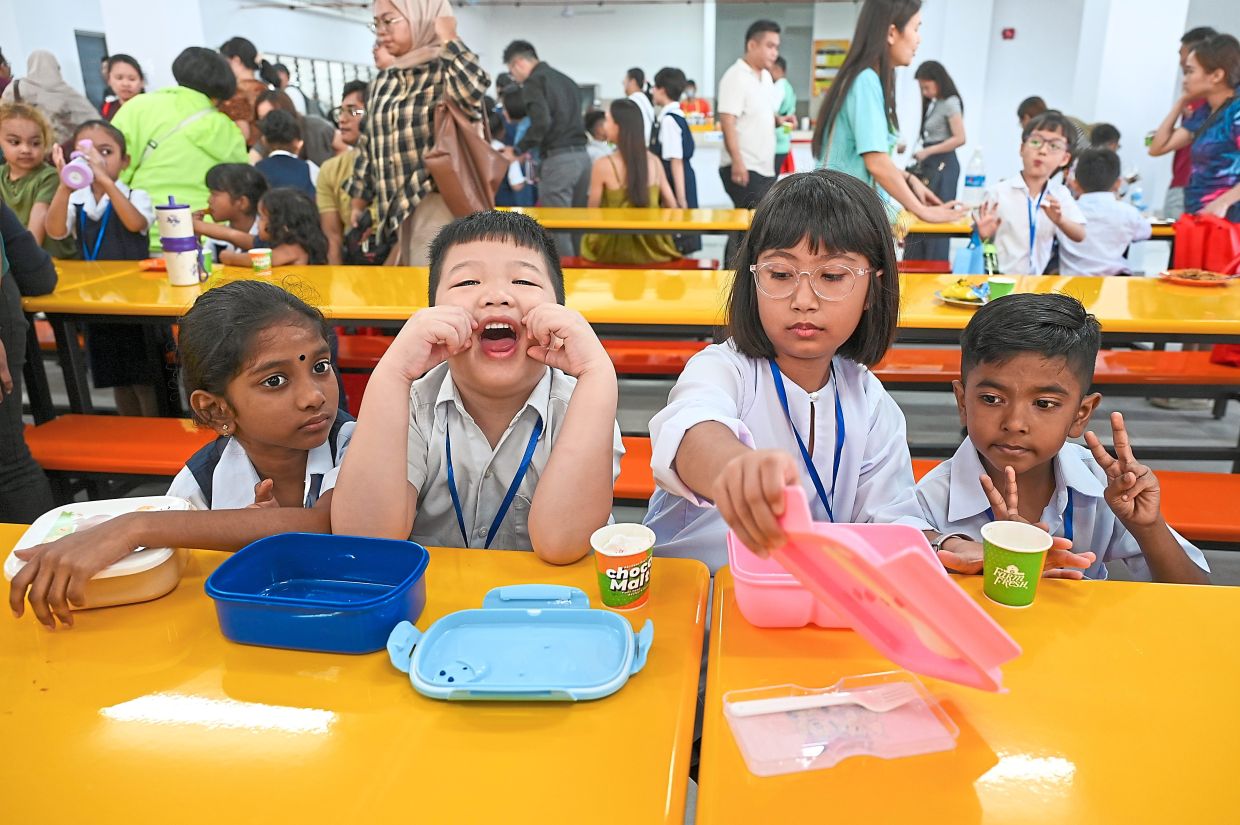
Happy tummies: Pupils posing as they finish their breakfast during recess at SJK(C) Ladang Regent, Elmina. — IZZRAFIQ ALIAS/The StarHappy tummies: Pupils posing as they finish their breakfast during recess at SJK(C) Ladang Regent, Elmina. — IZZRAFIQ ALIAS/The Star

For these children, their first day of school saw them attending Year One classes where the tea­chers gave out instructions purely in Mandarin.

But they seemed to have no trouble following the classes, as most of them had been learning Mandarin since kindergarten.

Yesterday marked not only the first day of the 2026 school year but also the launch of SJK(C) Ladang Regent, Elmina.

Its board of directors chairman Datuk Dr Azman Ching said there are around 300 students enrolled at the school, which was reloca­ted from Gemencheh, Negri Sembilan.

Meanwhile, Education Minister Fadhlina Sidek, who was present at the launch, said all stakehol­ders will soon be required to sign the Child Protection Policy as a pledge to safeguard children.

“We are not going to compromise on this matter. It is our shared responsibility to ensure our schools are safe and our children are protected,” she said.

The ministry will also be distributing a Safe Schools book to students and parents, she added.

Fadhlina also said the ministry is taking into account all views from parents regarding the abolish­ment of the Ujian Pen­taksiran Sekolah Rendah (UPSR) and Penilaian Tingkatan Tiga (PT3) examinations, as well as the performance levels for the Classroom-Based Assessments, when they begin reviewing the reinstatement of the two national examinations.

“The review will be held this year and we will announce (the results) as soon as possible,” she said.

Last week, the minister said that she had reactivated the National Education Advisory Council to study the need to revive the two examinations.

UPSR was abolished in 2021, followed by PT3 in 2022, and both were replaced with School-Based Assessment.

More than five million students began the 2026 school year nationwide since Sunday.

Friday, January 9, 2026

China says it cannot accept countries acting as 'world judge' after US captures Maduro; China's Strategic Victory in Venezuela: The End of US Dominance?

"> 

US Department of Justice federal officers stand guard outside the Metropolitan Detention Center, where ousted Venezuelan President Nicolas Maduro is being held, in the Brooklyn borough of New York City, on January 4, 2026. Venezuela's deposed president Nicolas Maduro is scheduled to appear before a federal judge in New York at noon on January 5, to be formally notified about the charges against him, the court said. Maduro and his wife, Cilia Flores, were seized by US forces during a pre-dawn raid on January 3 in Caracas and brought to New York to face charges of "narcoterrorism" tied to alleged trafficking of tons of cocaine into the United States. - AFP

BEIJING: Chinese Foreign Minister Wang Yi said Beijing cannot accept any country acting as the "world's judge" after the United States captured Venezuela's President Nicolas Maduro.

"We have never believed that any country can act as ‌the world's police, nor do we accept that any nation can ⁠claim to be the world's judge," Wang told his Pakistani counterpart Ishaq Dar during a meeting in Beijing on Sunday (Jan 4), referring to "sudden developments in ​Venezuela" without directly mentioning the US.

"The sovereignty and security of all countries should be fully protected under international law," China's top diplomat added, in his first remarks since images of the 63-year-old Maduro blindfolded and handcuffed on Saturday stunned Venezuelans.

Maduro is in a New York detention centre awaiting a Monday court appearance on drug charges.

Beijing has ambition to become a diplomatic heavyweight, a goal it articulated most clearly after brokering a surprise rapprochement between ‍Saudi Arabia and Iran ⁠in 2023, pledging ‍to "play ​a constructive role in global hotspot issues."

Analysts say Beijing's success in going ⁠toe-to-toe with the US in trade negotiations has only reinforced China's confidence.

However, President Donald Trump's assertion that the US will oversee Venezuela's government for the time being poses a stern test to the "all-weather comprehensive strategic partnership" Beijing and Caracas ‍struck in 2023, marking almost 50 years ‍of diplomatic ties.

"It was a big blow to China, we wanted to look like a dependable friend ‌to Venezuela," said a Chinese government official briefed on a meeting between Maduro and China's special representative for Latin American ⁠and Caribbean affairs, Qiu Xiaoqi, hours before his capture.

Maduro's son visited China's top-ranking Peking University in 2024, where he enrolled in 2016, they said, adding they were unsure whether he would return despite years of diplomatic engagement with Caracas ⁠around his education and ties to China.

The world's second-largest economy has provided Venezuela with an economic lifeline since the US and its allies ramped up sanctions in 2017, purchasing roughly US$1.6  billion worth of goods in 2024, the most recent full-year data available.

Almost half of China's purchases were crude oil, customs data ‍shows, while its state-owned oil giants had invested around US$4.6 billion in Venezuela by 2018, according ⁠to data from the American Enterprise Institute think tank, which tracks Chinese overseas corporate investment. - Reuters

Related:

GT investigates: Unveiling US' long-standing geopolitical, economic and ideological intrigues in Latin America

Sunday, January 4, 2026

China racing ahead in Britain


Keith’s BYD car dealership in Leeds, England. In the last year, Chinese-made vehicles have doubled their share of new car registrations in Britain. — Owen Richards/The New York Times

ON a recent Monday in Leeds, Dougal Keith drove a Chinese-made BYD Seal Excellence out of his dealership and hit the accelerator.

The car can reach 100kph in 3.8 seconds – a key selling point – and comes with a £48,000 price tag, roughly 20% cheaper than a top-range Tesla Model 3.

Keith, a car salesman for more than 40 years, said customers were sceptical of buying Chinese vehicles when he opened a showroom for BYD in 2023.

Now, he runs six dealerships devoted to the brand.

“Some people think because it’s Chinese it’s made cheaply,” he said. “But then I ask, ‘Where do you think your iphone is assembled?’”

Chinese cars are gaining ground in Britain for a mix of reasons.

There are no steep tariffs on Chinese EVS – unlike in the EU or the US – allowing lower prices. British buyers are also less brand-loyal, with no major domestic mass-market automaker to defend.

Roughly a dozen Chinese brands, including BYD, Chery and Geely, made up 13% of new car registrations in Britain in November, double their share a year ago, according to the Society of Motor Manufacturers and Traders.

“The pace is like nothing the market has ever seen,” said Ian Plummer, chief commercial officer of Autotrader.

BYD and Chery, selling Jaecoo and Omoda models, are gaining market share five or six times faster than Tesla a decade ago or South Korea’s Kia in the 1990s.

Britain’s domestic auto industry has been shrinking, producing about 600,000 cars in 2025, roughly half of the output at the end of the last decade.

Major producers include Nissan, Jaguar Land Rover and Mini.

Meanwhile, China is now the world’s largest car exporter and leads in EV production, exporting to markets from Mexico to South Africa.

Chinese automakers have mastered shifting regulations and consumer demand, particularly for hybrids.

Beijing encourages exports to manage domestic overcapacity, sometimes leading to heavy losses and triggering pushback in Western countries.

The US has imposed 100% tariffs on Chinese EVS, the EU up to 45%, while Britain charges 10% on all imported cars.

About two million new cars are sold in Britain each year.

Since 2019, the number of brands registering sales has nearly doubled to over 70.

No single brand commands loyalty like Volkswagen in Germany or Renault in France, giving newcomers room to grow.

Chinese brands first gained a foothold with SAIC Motor’s acquisition of MG.

Production gradually moved to China, and the UK MG factory closed in 2016.

MG now accounts for over 4% of new registrations – the largest share for a Chinese-owned brand – while BYD holds just over 2%, similar to Tesla.

Keith sold his first car in 1980 at 16 and later expanded his family business.

By the early 2020s, he noticed BYD and,

“Some people think because it’s Chinese it’s made cheaply. But then I ask, ‘Where do you think your iphone is assembled?’”
Dougal Keith

with other independent dealers, secured one of the first UK franchises.

Initially, sales were slow, with only an all-electric model available.

As more models arrived, particularly plug-in hybrids, sales surged.

Dealers highlighted tech features: rotatable touch screens, wireless chargers, voice controls, even karaoke.

“Customers are beginning to understand it’s not a budget brand,” said Fozia Siddique, who has worked with BYD since the Leeds showroom opened.

She recently sold a BYD plug-in hybrid SUV to Steve Vine, 55, who drives more than 480km from Leeds to Cornwall and wanted a long-range EV.

Roger Lyons, 60, in Derbyshire, chose a £48,000 BYD Seal Excellence after testing Audi, Hyundai and Porsche models.

“It’s almost as nice to drive as a Porsche, and it’s got more toys than any of the others,” he said, adding that switching to electric would help cut fuel costs.

Encouraged by the success of BYD, Keith opened two more dealerships selling Changan vehicles.

His group, which runs 28 dealerships selling global brands, expects £500mil in sales for 2025, over 50% higher than 2024.

In September, the Leeds BYD showroom outsold all his other local locations.

“It’s pretty good going for a brand that two years ago nobody had heard of,” he said. — ©2026 The New York Times Company

By ESHE NELSON This article originally appeared in The New York Times
3 Jan 2026

Thursday, January 1, 2026

Happy New Year 2026, 2025 in Review with Professor Martin Jacques


Happy New Year 2026 Wishes Images, Quotes, Status: Share wishes with friends and family

Happy New Year 2026 Wishes Images, Quotes, Status, Wallpapers, Greetings Card, Messages, Photos, Pics: As 2025 New Year’s Eve celebrations unfold worldwide today, people prepare to welcome the New Year 2026 with vibrant fireworks, festive gatherings, and thoughtful resolutions.

Happy New Year 2026 Wishes Images, Status, Messages LIVE: Welcome the New Year with 20+ Greetings, Quotes, Latest Updates, and more

IndianExpress.com has curated a selection of warm wishes, inspirational messages, eye-catching images, and social media updates to help readers share the spirit of the season and celebrate the New Year on a joyful, uplifting note.

Happy New Year 2026: Warm wishes to share with family

May 2026 bring our family good health, happiness, and peace.

Wishing a New Year filled with love, laughter, and togetherness.

2025 in Review with Professor Martin Jacques