Share This

Friday, April 22, 2022

Boao Forum for Asia Annual Conference 2022: Only true multilateralism can benefit the world, Xi proposes Global Security Initiative, sends signal of peace, stability amid global turmoil


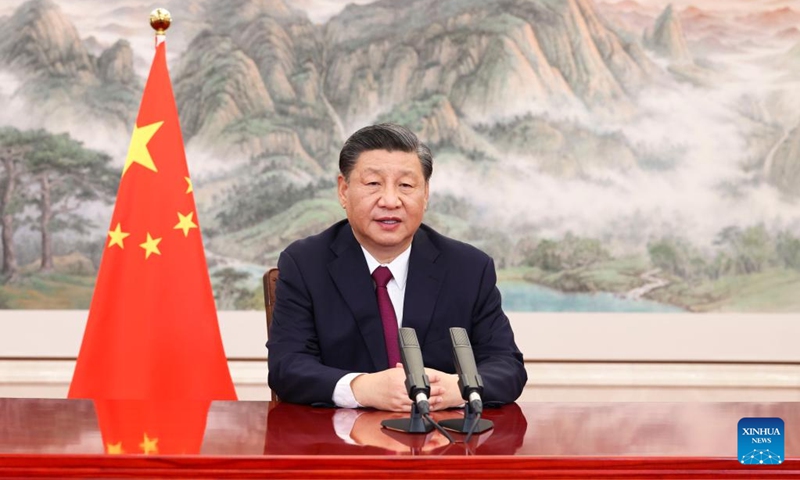
Chinese President Xi Jinping delivers a keynote speech via video at the opening ceremony of the Boao Forum for Asia Annual Conference 2022, on April 21, 2022.(Photo: Xinhua) Chinese President Xi Jinping delivers a keynote speech via video at the opening ceremony of the Boao Forum for Asia Annual Conference 2022, on April 21, 2022.(Photo: Xinhua)

The Boao Forum for Asia Annual Conference 2022 is being held in Boao, Hainan Province, from April 20 to April 22. The theme of this year's forum is "The World in COVID-19 and Beyond: Working Together for Global Development and A Shared Future." In a keynote speech delivered at the opening ceremony of the forum on Thursday, Chinese President Xi Jinping proposed a Global Security Initiative, emphasizing the need to uphold "true multilateralism" and that it is particularly important for major countries to lead by example in honoring equality, cooperation, good faith and the rule of law, and act in a way befitting their status.

At present, the changes in the world, the times, and history are unfolding in an unprecedented way. At a time when unprecedented global changes are combined with a once-in-a-century pandemic, the world is at the crossroads of unity or division, cooperation or confrontation, upholding justice or hegemony. Xi's emphasis on "true multilateralism" is of great significance for lighting the way forward for international society to move on and promote peaceful development.

What is true multilateralism? It is, after all, that international affairs should be handled by all through consultations and the future and destiny of the world will be jointly decided by all countries. Such "true multilateralism" cannot be separated from the United Nations, therefore we must firmly safeguard the international system with the UN at its core; it cannot be separated from the international law, so we must unwaveringly uphold the international order underpinned by international law; it cannot be separated from global cooperation, so major powers need to lead by example in upholding justice, enforcing the rule of law, taking responsibility, and focusing on actions.

When representatives from 42 countries and regions were discussing regional solidarity and cooperation at the Boao forum, Washington was hosting the G20 Finance Ministers and the Central Bank Governors meeting. Finance ministers of countries including the US and Canada walked out when the Russian delegate spoke, staging a show of "political protest"at an international multilateral economic cooperation forum. The US supports a draft resolution to adjust the use of the veto by permanent members of the UN Security Council. All those acts are weakening and jeopardizing multilateralism and multilateral mechanisms.

In stark contrast, Asia is "climbing the hill together and going down the ravine together" and making "sugarcane and lemongrass grow in dense clumps." In 2021, the region withstood the pressure of the raging COVID-19 pandemic and led the global economic recovery. Measured by purchasing power parity, Asia accounted for 47.4 percent of the world's economy in 2021. From taking the lead in advocating the Five Principles of Peaceful Coexistence and the Bandung Spirit, to jointly promoting the signing of the Regional Comprehensive Economic Partnership Agreement, Asian countries have made maintaining and practicing multilateralism in the region to transform from an experiment to a model, through all-round and broad-based win-win cooperation.

However, for Washington accustomed to creating rivals and stirring up trouble around the world to gain benefits, the stability and prosperity of Asia have become a thorn in its flesh. To seize the moral high ground and sugarcoat its geopolitical ambitions, Washington has even packaged its so-called Indo-Pacific Strategy as "multilateralism." It also has attempted to disturb regional peaceful development by strengthening its "multilateral mechanisms," including its "quadrilateral mechanism" and "trilateral security partnership." If we want to practice "true multilateralism," we must be wary of and oppose such "fake multilateralism."

It is clear that a lot of unrest, division, and poverty have been created in different parts of the world under practices of prioritizing one country's interests, making coteries that uphold hegemony, treating international rules as a tool for the interests of one nation, using a certain country's interests as the criteria, and engaging in "selective multilateralism." The US is still using the Russia-Ukraine conflict to further divide the world into camps and keeps pressuring neutral countries to "take sides." Such a "fake multilateralism" sometimes is deceptive to some extent, but more and more countries have seen through it and denied any attempts to stir up troubles globally or seize geopolitical "fruits."

As a Chinese saying goes, "Power may win for the time being, but justice will prevail for the long run." All countries across the world are in the same boat with a shared destiny. We must work together to sail through the stormy seas to a bright future. Any attempt to throw whoever into the sea is unacceptable. From the Global Development Initiative to the Global Security Initiative, China has always been a firm practitioner of true multilateralism. History will continue to prove that such a choice is on the right side of the history and on the side of human progress.
Source link.  

 Xi proposes Global Security Initiative at Boao Forum, 'sends signal of peace, stability amid global turmoil’...

Solidarity stressed amid global changes, injects confidence in economic recovery

Xi proposes Global Security Initiative at Boao Forum, 'sends signal of peace, ...

Chinese President Xi Jinping proposed a global security initiative which stressed a commitment to the vision of common, comprehensive, cooperative ...
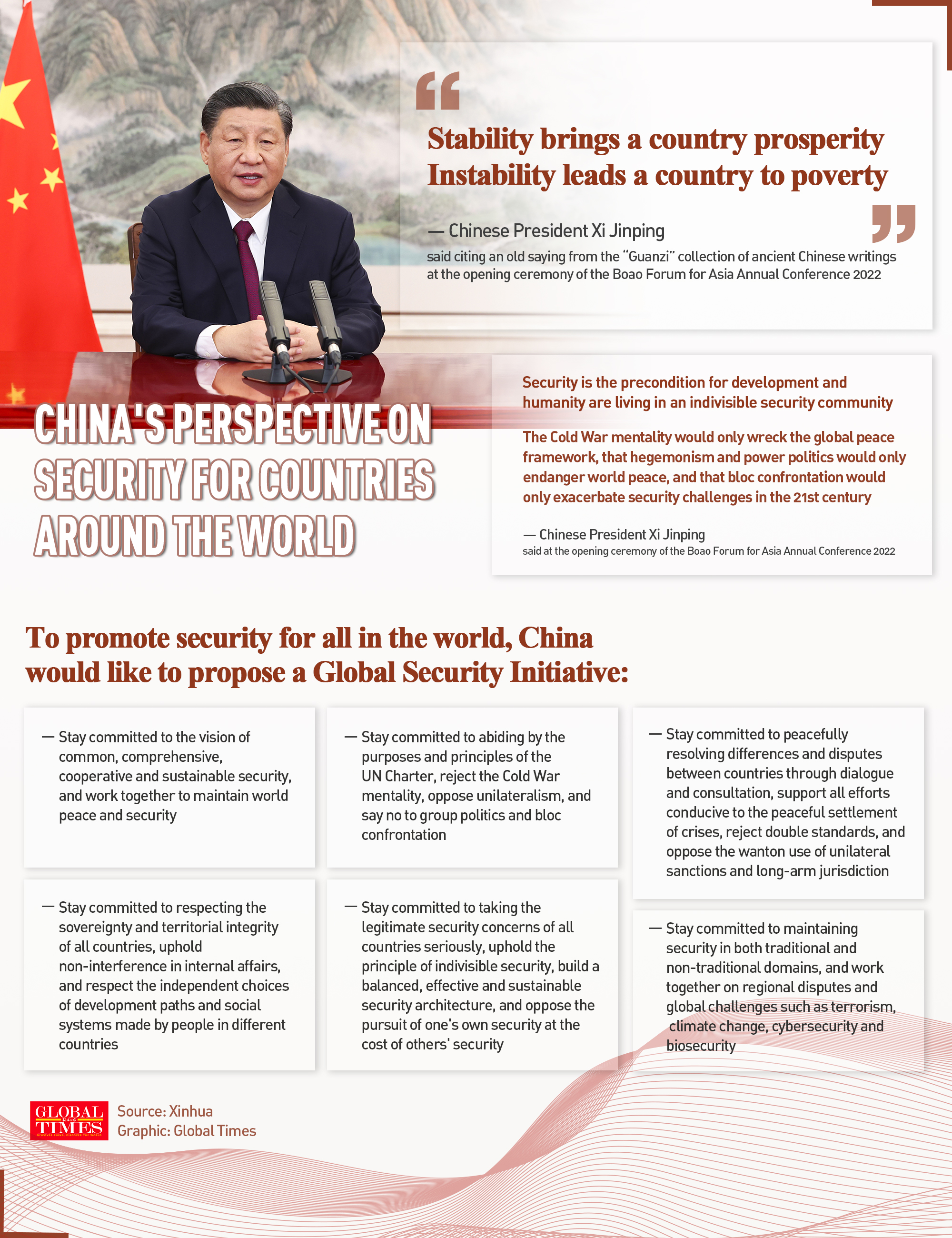
China's perspective on security for countries in the world. Graphic: GT 

Chinese President Xi Jinping delivered a keynote speech via video link at the opening ceremony of the Boao Forum for Asia Annual Conference 2022 held in Boao, Hainan Province. Here are some highlights of his remarks (4/12)


Image

China's multilateralism pledge at Boao Forum helps safeguard world security amid pandemic, conflict

China's commitment to multilateralism and opening-up is reassuring to a world faced with rising security risks, academics and delegates attending the Boao Forum for Asia (BFA) 2022 said on Wednesday, as the international forum amid a new round of epidemic ...
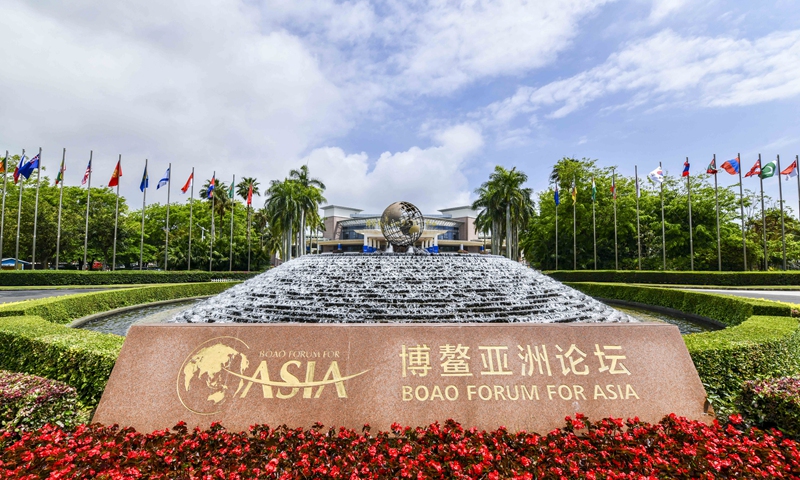
Multilateralism, regional integration will ease supply chain problems: Boao Forum

The ongoing global supply chain crisis should be tackled by the major economies leading by example through multilateral consultation, economists and delegates attending the Boao Forum for Asia 2022 said.
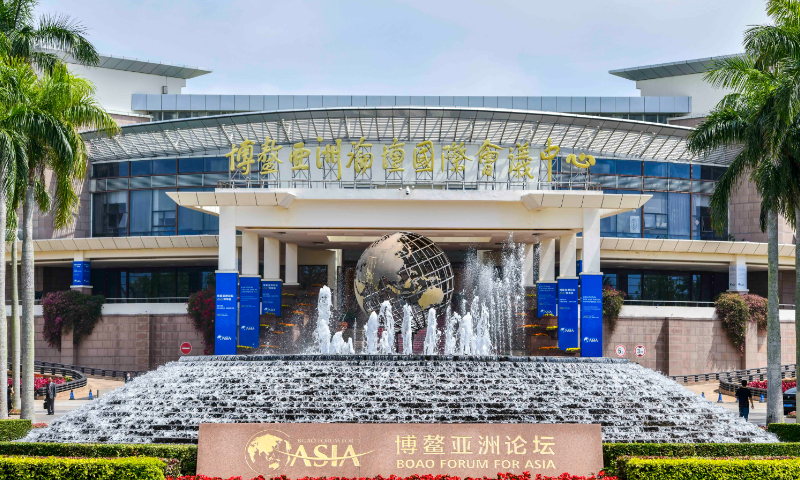
 

Boao Forum is a Chinese message about world collaboration in the post-pandemic era: envoy

Despite global challenges, the Boao Forum for Asia held in South China's Hainan Province, sent the world an important message of global collaboration and development while addressing new opportunities in Asian regional cooperation to overcome economic hurdles in the post-pandemic era, the Mongolian Ambassador to China said on Thursday.


Related posr:


BOAO Forum 2016: Asia's New Future - New Dynamics, New Vision

The telltale signs of a scam, Macau scams: Spot, avoid and report scammers; It’s all in the details

CLICK TO ENLARGE 

CLICK TO ENLARGE

Victim usually fall prey due to fear, naivety or greed

Fear, naivety and greed may have caused victims to fall prey to scammers who cheat them of thousands of ringgit, says MCA Public Services and Complaints Department head Datuk Seri Michael Chong.

He said aside from making phone calls, scammers would also write to the victim or even meet them in person.

“They claim to be government officers and they want you to park the money (temporarily) and you can take it back later – so the money will not be confiscated,” he said while elaborating on how some victims were conned.

“Are there such people who are kind enough to ask someone to hide their money? When I asked, the victims could not answer me,” he added.

Chong said some victims revealed that the scammers who claimed to be government officers had spoken to them in Mandarin, which is uncommon as the medium of instruction used by civil servants is either Bahasa Malaysia or English.

Some of them have also received calls after office hours, which is out of the norm.

“They will frighten victims by saying that they have been charged with money laundering or their property will be confiscated. Many victims get duped because they are scared.

“Let me ask one thing: if you have not done something wrong, then why are you scared? The conmen will know that you have done something wrong from the way they talk to you, and they will scam you further,” he added.

Chong said most of the victims will be told not to divulge any information to their family.

He cited a case where the scammer had accompanied the elderly victim to the bank to withdraw money. They would, however, wear a cap or sunglasses to ensure they cannot be identified or captured by CCTVs. The scammers would also address the victim as their parent to avert suspicion.

He said some victims were told not to cut the (phone) call until the “job” was done, and this could sometimes stretch for hours.

As for those who were lured with the promise of big prizes, Chong noted that simple logic applied here.

“If you didn’t buy any lottery ticket, how do you expect to strike the lottery?” he said.

There is also no clear demographic of scam victims.

“Age is not a factor but of course elderly victims are easier to target,” he said.

Chong also said banks should also be alert when elderly citizens are seen withdrawing huge amounts at one go.

Source link

 Macau scams: Spot, avoid and report scammers

CLICK TO ENLARGE

KUALA LUMPUR: Despite constant reminders and notifications, people are still being duped by Macau Scams.

Last year, 1,585 Macau scam cases were reported nationwide resulting in RM560.8mil in losses.

This year, the number has already reached 1,258 cases between Jan 1 and April 19, involving RM65.4mil in losses.

ALSO READ: Got your EPF money? Beware the scammers

The Macau Scam modus operandi often starts with a phone call from someone pretending to be an officer from a bank, government or law enforcement agency or debt collector.

The scammer will then claim that the potential victim owes money, has an unpaid fine or has even been implicated in a crime.

The victim will then be given a choice to settle the matter – by transferring his funds to a mule account designated by the “officer” or by facing “dire consequences”.

These unsuspecting victim will then be asked to make payments to get him off the hook.

Hundreds of millions of ringgit have been lost to these scammers, who pose as officers from government agencies such as the police, Bank Negara Malaysia (BNM) and even the Inland Revenue Board (LHDN).

ALSO READ: It's all in the details

The range of victims have also expanded to include those in the professional line such as doctors and lawyers.

Kuala Lumpur Commercial Crime Investigation Department (CCID) chief Asst Comm Mohd Mahidisham Ishak said several factors may address why Macau scam cases are still occurring.

“We believe it is a combination of a few things.

While we have conducted various campaigns to increase awareness, it could be that the message has not reached society thoroughly.

“We have utilised various platforms, including social media and public transport to spread more awareness on Macau scams.

“We will step up such campaigns to include having talks in schools to ensure that knowledge on such scams reach the masses,” said ACP Mohd Mahidisham.

Changes in the scammers’ modus operandi might have also contributed to such cases still occurring, ACP Mohd Mahidisham added.

“Scammers have posed as officers from the police force, Customs department, BNM and LHDN in the past.

“As mentioned in the past, scammers also used the Voice Over Internet Protocol (VOIP) to mask their phone numbers.

“We hope the public will remain vigilant against such tactics,” he said.

ALSO READ: Recent cases of Macau scams tell a sorry tale

Victims not informing family members or authorities due to embarrassment could be another factor for such cases, he lamented.

ACP Mohd Mahidisham is also concerned that such scam methods have become more elaborate.

“Usually, the harassment by the scammers will last between one to two hours.

“However, since last month, we have been recording cases where the victims were harassed for about a week. It is important for family members to act if they spot any changes or peculiar actions (faced by the affected family member),” he said.

ACP Mohd Mahidisham also reminded the public that agencies such as the police do not conduct investigations over the phone.

“Witnesses or those who can assist the investigation will be required to make an appointment so that their statements will be recorded at the police station or headquarters.

“Don’t be fooled by such calls ... better yet, if you do not recognise the phone number, do not answer the call,” he stressed.

The public should never divulge any banking details to a third party, he added.

“Banking details should be kept safe. Don’t register the phone number of others for your bank account,” he said.

ACP Mohd Mahidisham urged those with enquiries to contact the CCID Scam Response Centre at 03-26101559/1599, Whatsapp the CCID info-line at 013-2111222, or log on to semakmule.rmp.gov.my.

“Utilise the facilities that we have prepared for the public.

“Preventing and busting scams, especially Macau scams, remain our priority,” he said.

Meanwhile, Bukit Aman Commercial Crime Invesigation Department (CCID) director Comm Datuk Mohd Kamarudin Md Din recently said Macau scam syndicates were using a new tactic to target Tabung Haji account holders.

“We have recorded 65 cases amounting to RM3.6mil in losses already recorded.

“Based on investigations, these activities are being conducted by Macau scam syndicates.

“They would make calls to the victims and intimidate the victims with allegations of involvement in criminal activities and outstanding credit card debts among other tactics,” he said.

He said the syndicates would then ask for the victims to disclose their banking information to clear them of any wrongdoing.

“We have now detected cases where the syndicates have withdrawn money from Tabung Haji accounts linked to conventional bank accounts belonging to the victims.

“The convenience of Internet banking facilities by Tabung Haji and other conventional banks has made this possible,” he said, adding that investigations revealed the victims had provided banking information to unknown individuals over the phones.

He said as a result, the victims not only lost money from their bank accounts but also money from their pilgrimage fund accounts.

Source link.  

Macau scams: It’s all in the details

 CLICK TO ENLARGE 

CLICK TO ENLARGE

PETALING JAYA: Well-choreographed storylines backed with the victims’ personal information and the ability to instil fear over possible repercussions from the authorities – these are some of the reasons many are still falling for Macau scams despite wide media coverage.

Hafishah Ab Hamid, 37, who lost over RM30,000, said she was pressured into believing her identity was stolen, which not only caused her to have RM40,000 in income tax arrears with the Inland Revenue Board (LHDN), but also “a wanted person notice” for her involvement in money laundering and drug trafficking.

ALSO READ: Got your EPF money? Beware the scammers

She received a letter purportedly from LHDN before receiving a phone call on March 29.

“I was hesitant at first, but I was transferred to a ‘Sarjan Nadia’ who asked me to Google ‘Kota Baru police station’. She said I would receive a call from that number and I did, which is when I started to fall for the scam.

“This ‘Sarjan Nadia’ then called ‘Bukit Aman’ to check if I was involved in other activities ... the background noises were realistic – you could hear sirens, people yelling ‘emergency case’, and then an officer from ‘Bukit Aman’ informed me that I was involved in money laundering and drug trafficking.

“I started to panic, but she told me to not inform anyone, not even my husband.

“She said to imagine how my husband and children would feel if they knew,” she added.

ALSO READ: Recent cases of Macau scams tell a sorry tale

During the four-hour conversation, Hafishah was also transferred to “Datuk ACP Zul”, who was supposed to clear her name and suspend an arrest warrant issued in her name.

“‘Datuk ACP Zul’ asked for information on my bank accounts, and I told him everything, including my ASB (Amanah Saham Bumiputra) details. He told me to transfer my (ASB) money to my bank account so that they could check if the money was obtained legally,” she said.

The so-called Datuk ACP Zul also sent her an Android Package (APK) file, which is the file format used by the Android operating system for the installation of mobile apps.

“When I installed the app, a Bank Negara Malaysia logo appeared and I had to provide details such as my bank, full name, identification number, user name and password.

“I didn’t suspect anything at that time because I had just transferred my money (from ASB) to my account and I saw that my balance was RM32,000.

“I didn’t think I was being cheated because I didn’t transfer money to their account, but what I didn’t know was that they transferred my money to another account,” said Hafishah.

It is understood that the app she installed allowed the scammer to access her phone and obtain her information, which included her Transaction Authorisation Code (TAC) security number.

“I didn’t get back my money – I was told that they transferred my money in stages so it is very difficult to trace (it). Bank Negara said they couldn’t freeze the scammer’s bank account.

“The scammer contacted me the next day. I informed the police, but I was told to just block their number.

“So I feel sad because even though we have their number and they are actively using it, nothing can be done to trace them,” she said, adding that she hopes others will educate themselves and not fall for such scams.

ALSO READ: Spot, avoid and report scammers

Nurul Najwa Ibrahim, 23, was in confinement when she received a call from “Pos Laju” on March 10, claiming that she posted illegal items – bank and identifications cards – and these were held up at the Kuantan police station.

“The caller said I needed to lodge a police report because perhaps someone was using my personal information. When I said that I didn’t post anything, and he asked me to press ‘9’ before I was transferred to a ‘Corporal Nasir Ahmad’,” she said.

To convince her, Najwa was asked to Google the Kuantan police station phone number and she was told to expect a call from that number.

“‘Corporal Nasir’ gave (me) two options: they would issue an arrest warrant or I could cooperate.

“He sent me a bank account number and instructed me to bank in RM3,000 so he could check the source of my money.

“After a while, I thought to myself, how could they check if my money came from illegal means unless they had my bank statement? That was when I realised that I had been duped.

“But the fact that they knew my full name, my identification number and they called me using the same number as the one I Googled made me believe that they were genuine,” said Najwa.

She said she hopes that the authorities would do more to curb this scam menace.

“The public should be wary – don’t be afraid even if they claim that they have ‘police cases’ on us,” she added.

Desperate to get a new car, Mazura Mat Esa, 41, ended up falling into depression after being manipulated by a scammer on March 25.

“I saw an advertisement on an online marketplace and contacted the seller who claimed he had submitted my loan application to Maybank the same night.

“The next day, a ‘Maybank officer’ calling himself ‘Maran’ phoned and said he would help expedite the bank process for RM2,000.

“The way he spoke was so convincing and he could answer all my questions,” she said.

Mazura transferred a total of RM5,000 as “processing fees” and to book a licence plate number.

Until today, she still hasn’t received her dream car.


Thursday, April 21, 2022

Fear-of-missing-out factor in property market


FOR those who are interested to know about the health of the residential property market, Bank Negara Malaysia’s article “Developments in the Residential Property Market” (https://bit. ly/373eyeg) is a must-read.

The article, published in Bank Negara’s latest Financial Stability Review, states that house prices in Malaysia are seriously unaffordable at 4.7 times median house price to annual median income (median multiple). A house is considered affordable if the median multiple is 3.0 or below.

Why do Malaysians find houses seriously unaffordable? On the supply side, there is a mismatch due to market failure to provide enough affordable housing. On the demand side, housing affordability is limited by insufficient income and high indebtednes for some.

I think buyers’ buoyant sentiment or fear of missing out (FOMO) also contributes to the high median multiple or price-to-income ratio.

The most probable reason why investors buy houses is because they think the price will go up further. Yes, the current house prices are high and stagnating, but they reason that in the long term, prices will maintain their upward trend.

For investors, property investment can be even more lucrative compared to stocks because they can have a bigger leverage, which make their returns much higher if prices go up.

Also, they do not receive margin calls even if prices decline as long as they can service the monthly mortgage repayment.

For owner-occupiers, one of the reasons for buying houses at the current high prices is the fear that if they do not buy now, the price may go up later.

In the same article, Bank Negara pointed out that 57.3% of approved housing loans in the second half of 2021 were granted to owner-occupiers. Presumably, the other 42.7% of approved housing loans were granted to investors.

Researchers at the Federal Reserve Bank of Dallas, United States, recently published a study titled “Real-time Market Monitoring Finds Signs of Brewing U.S. Housing Bubble” (https://bit.ly/36zs0jj).

Here is what they say: “But real house prices can diverge from market fundamentals when there is widespread belief that today’s robust price increases will continue.

“If many buyers share this belief, purchases arising from a ‘fear of missing out’ can drive up prices and heighten expectations of strong house price gains.

“This self-fulfilling mechanism leads to price growth that may become exponential (or explosive), resulting in the housing market becoming progressively misaligned from fundamentals until investors become cautious, policymakers intervene, the flow of money into housing dries up and a housing correction or even a bust occurs.”

The study listed the many consequences associated with explosive appreciation in real house prices. “Expectations-driven explosive appreciation (often called exuberance) in real house prices has many consequences, including the misallocation of economic resources, distorted investment patterns, individual bankruptcies and broad macroeconomic effects on growth and employment.”

I think an extreme example is Japan. For 30 years or so since 1950, house prices in Japan had only gone up.

Property prices rose by as much as six to seven times during the 1980s asset bubble as Japanese house buyers, whether investors or owner-occupiers, were all piling into real estate for fear of missing out based on the belief that prices could only go up.

Property prices in Japan continued to rise until the early 1990s and then started a drastic decline. Even some 30 years later, they have still not recovered.

In sum, should the FOMO sentiment be prevalent, prices will continue to be high relative to income or rent until the trend changes.

 Source link.    

  Related posts:

  WITH the country finally transitioning into endemicity, the Malaysian property market is expected to regain its momentum this year. H...