Share This

Sunday, January 4, 2026

China racing ahead in Britain


Keith’s BYD car dealership in Leeds, England. In the last year, Chinese-made vehicles have doubled their share of new car registrations in Britain. — Owen Richards/The New York Times

ON a recent Monday in Leeds, Dougal Keith drove a Chinese-made BYD Seal Excellence out of his dealership and hit the accelerator.

The car can reach 100kph in 3.8 seconds – a key selling point – and comes with a £48,000 price tag, roughly 20% cheaper than a top-range Tesla Model 3.

Keith, a car salesman for more than 40 years, said customers were sceptical of buying Chinese vehicles when he opened a showroom for BYD in 2023.

Now, he runs six dealerships devoted to the brand.

“Some people think because it’s Chinese it’s made cheaply,” he said. “But then I ask, ‘Where do you think your iphone is assembled?’”

Chinese cars are gaining ground in Britain for a mix of reasons.

There are no steep tariffs on Chinese EVS – unlike in the EU or the US – allowing lower prices. British buyers are also less brand-loyal, with no major domestic mass-market automaker to defend.

Roughly a dozen Chinese brands, including BYD, Chery and Geely, made up 13% of new car registrations in Britain in November, double their share a year ago, according to the Society of Motor Manufacturers and Traders.

“The pace is like nothing the market has ever seen,” said Ian Plummer, chief commercial officer of Autotrader.

BYD and Chery, selling Jaecoo and Omoda models, are gaining market share five or six times faster than Tesla a decade ago or South Korea’s Kia in the 1990s.

Britain’s domestic auto industry has been shrinking, producing about 600,000 cars in 2025, roughly half of the output at the end of the last decade.

Major producers include Nissan, Jaguar Land Rover and Mini.

Meanwhile, China is now the world’s largest car exporter and leads in EV production, exporting to markets from Mexico to South Africa.

Chinese automakers have mastered shifting regulations and consumer demand, particularly for hybrids.

Beijing encourages exports to manage domestic overcapacity, sometimes leading to heavy losses and triggering pushback in Western countries.

The US has imposed 100% tariffs on Chinese EVS, the EU up to 45%, while Britain charges 10% on all imported cars.

About two million new cars are sold in Britain each year.

Since 2019, the number of brands registering sales has nearly doubled to over 70.

No single brand commands loyalty like Volkswagen in Germany or Renault in France, giving newcomers room to grow.

Chinese brands first gained a foothold with SAIC Motor’s acquisition of MG.

Production gradually moved to China, and the UK MG factory closed in 2016.

MG now accounts for over 4% of new registrations – the largest share for a Chinese-owned brand – while BYD holds just over 2%, similar to Tesla.

Keith sold his first car in 1980 at 16 and later expanded his family business.

By the early 2020s, he noticed BYD and,

“Some people think because it’s Chinese it’s made cheaply. But then I ask, ‘Where do you think your iphone is assembled?’”
Dougal Keith

with other independent dealers, secured one of the first UK franchises.

Initially, sales were slow, with only an all-electric model available.

As more models arrived, particularly plug-in hybrids, sales surged.

Dealers highlighted tech features: rotatable touch screens, wireless chargers, voice controls, even karaoke.

“Customers are beginning to understand it’s not a budget brand,” said Fozia Siddique, who has worked with BYD since the Leeds showroom opened.

She recently sold a BYD plug-in hybrid SUV to Steve Vine, 55, who drives more than 480km from Leeds to Cornwall and wanted a long-range EV.

Roger Lyons, 60, in Derbyshire, chose a £48,000 BYD Seal Excellence after testing Audi, Hyundai and Porsche models.

“It’s almost as nice to drive as a Porsche, and it’s got more toys than any of the others,” he said, adding that switching to electric would help cut fuel costs.

Encouraged by the success of BYD, Keith opened two more dealerships selling Changan vehicles.

His group, which runs 28 dealerships selling global brands, expects £500mil in sales for 2025, over 50% higher than 2024.

In September, the Leeds BYD showroom outsold all his other local locations.

“It’s pretty good going for a brand that two years ago nobody had heard of,” he said. — ©2026 The New York Times Company

By ESHE NELSON This article originally appeared in The New York Times
3 Jan 2026

Thursday, January 1, 2026

Happy New Year 2026, 2025 in Review with Professor Martin Jacques


Happy New Year 2026 Wishes Images, Quotes, Status: Share wishes with friends and family

Happy New Year 2026 Wishes Images, Quotes, Status, Wallpapers, Greetings Card, Messages, Photos, Pics: As 2025 New Year’s Eve celebrations unfold worldwide today, people prepare to welcome the New Year 2026 with vibrant fireworks, festive gatherings, and thoughtful resolutions.

Happy New Year 2026 Wishes Images, Status, Messages LIVE: Welcome the New Year with 20+ Greetings, Quotes, Latest Updates, and more

IndianExpress.com has curated a selection of warm wishes, inspirational messages, eye-catching images, and social media updates to help readers share the spirit of the season and celebrate the New Year on a joyful, uplifting note.

Happy New Year 2026: Warm wishes to share with family

May 2026 bring our family good health, happiness, and peace.

Wishing a New Year filled with love, laughter, and togetherness.

2025 in Review with Professor Martin Jacques


Wednesday, December 17, 2025

Malaysia PM Anwar makes sweeping Cabinet changes, including new trade and economy ministers

 The premier announced more than 25 changes to his Cabinet after previously saying that a major reshuffle was not on the cards.

Anwar Announces 28 Appointments, Portfolio Changes

 These are results for THE UNITY CABINET 2025,

Search instead for THE UNITYT CABINET 2025,

The premier announced more than 25 changes to his Cabinet after previously saying that a major reshuffle was not on the cards.

Anwar Announces 28 Appointments, Portfolio Changes


Malaysia Prime Minister Anwar Ibrahim shows a list of his Cabinet appointments after announcing a reshuffle on Dec 16, 2025. (Photo: Prime Minister’s Office of Malaysia/Afiq Hambali)

KUALA LUMPUR: Malaysian Prime Minister Anwar Ibrahim announced sweeping changes to his Cabinet on Tuesday (Dec 16), ending weeks of speculation over ministerial vacancies.

Notable changes - among more than 25 announced - include the appointments of United Malays National Organisation (UMNO) stalwart Johari Ghani as the new Investment, Trade and Industry Minister and Parti Keadilan Rakyat’s (PKR) Akmal Nasir as Economy Minister. There are 65 Cabinet posts in total. 

Johari was previously Minister for Plantations and Commodities while Akmal was Deputy Minister of Energy Transition and Water Transformation. 

A composite image of newly-appointed investment, trade and industry minister Johari Ghani (left) and economy minister Akmal Nasir (right). (Photos: Facebook/Johari Abdul Ghani, Facebook/Akmal Nasir)

During the internal PKR polls in May, Akmal was seen as closely aligned to Rafizi Ramli, who resigned as Economy Minister after he was defeated by Anwar’s daughter Nurul Izzah in a contest to be the party’s deputy president. 

UMNO is an ally of Anwar’s Pakatan Harapan (PH) ruling coalition, and the investment, trade and industry portfolio was previously held by Tengku Zafrul Aziz, who was an UMNO member before leaving the party to join the prime minister’s PKR. 

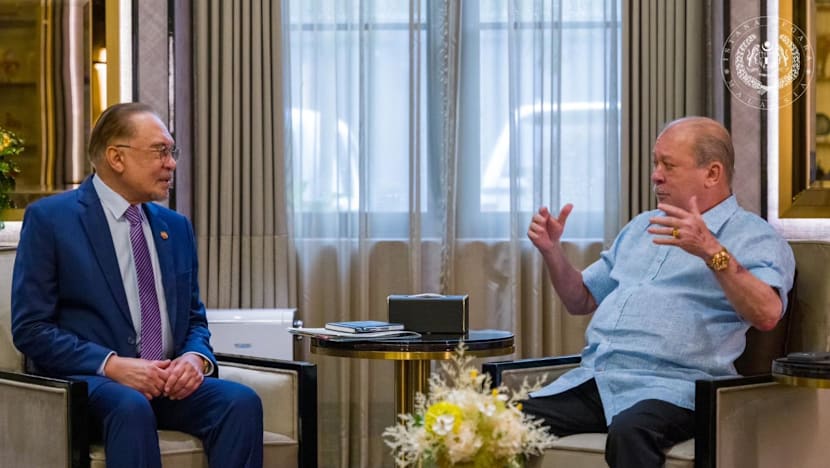
Malaysia Prime Minister Anwar Ibrahim held a meeting with Malaysian king Sultan Ibrahim Sultan Iskandar at Istana Bukit Tunku in Kuala Lumpur on Dec 16, 2025. (Photo: Facebook/Sultan Ibrahim Sultan Iskandar)

Speaking at the start of the press conference before he announced the changes, Anwar said: “There is a need to make some changes so that we have a Cabinet that works as a team, to focus on achieving higher economic growth and solving people's problems.” 

He had met the king Sultan Ibrahim Sultan Iskandar on Tuesday morning, and said in a Facebook post in the afternoon that he would make an announcement on the Cabinet at 3.30pm that day.

Among the changes he announced, Arthur Josep Kurup of the United Sabah People’s Party was appointed Natural Resources and Environmental Sustainability Minister, PKR vice-president R Ramanan was appointed Human Resources Minister while head of UMNO women’s wing Noraini Ahmad was appointed Minister for Plantations and Commodities. 

Democratic Action Party’s (DAP) Hannah Yeoh was reassigned from her Minister for Youth and Sports portfolio to be Minister in the Prime Minister’s Department (Federal Territories), with PKR’s Taufiq Johari taking her place.   

PKR’s Mustapha Mohd Yunus Sakmud was appointed Minister for Sabah and Sarawak while DAP’s Steven Sim was reassigned from his Human Resources portfolio to be Minister for Entrepreneur Development and Cooperatives. 

Senator and Islamic scholar Zulkifli Hasan was appointed Minister for Religious Affairs. 

The changes to Anwar’s Cabinet - including full minister and deputy minister positions - saw some members being reassigned while others were new appointments. 

Full ministers who were dropped completely from the line-up included PKR’s Zaliha Mustafa who was Minister in the Prime Minister’s Department (Federal Territories) and Minister for Religious Affairs Mohd Na’im Mokhtar. 

Na'im's exclusion was a surprise as he was sworn in as a senator for a second term on Dec 3. 

Notably, Malaysia's Education Minister Fadhlina Sidek retained her post despite facing criticism for her perceived lack of action and slow response on serious school issues like bullying, with student deaths triggering public outcry for her to resign. 

Earlier this month, three ministers were also sworn in as senators for a second term. Besides Na'im, they included Home Minister Saifuddin Nasution Ismail and Higher Education Minister Zambry Abdul Kadir. 

A minister in Malaysia must be an elected member of parliament (MP) in the lower house or an appointed senator in the upper house. 

On Dec 1, Anwar had said that a major reshuffle of his Cabinet is not on the cards, noting that his administration will “only function for a year plus” as Malaysia’s next general election is due by February 2028. 

However, there was speculation that changes to his Cabinet were imminent, with Tengku Zafrul stepping down from his Investment, Trade and Industry Minister portfolio earlier this month, creating a fourth ministerial vacancy. 

Tengku Zafrul had served for two terms as a senator since 2020. He held the trade minister post throughout his term in the Senate, which is the maximum period allowed.

Nik Nazmi Nik Ahmad had resigned as the Natural Resources and Environmental Sustainability Minister in May, while Ewon Benedick resigned as the Entrepreneur Development and Cooperatives Minister in November, ahead of the Sabah state elections.

Ewon had resigned over disagreements with the federal government on issues related to Sabah’s 40 per cent entitlement of federal net revenue derived from the state. 

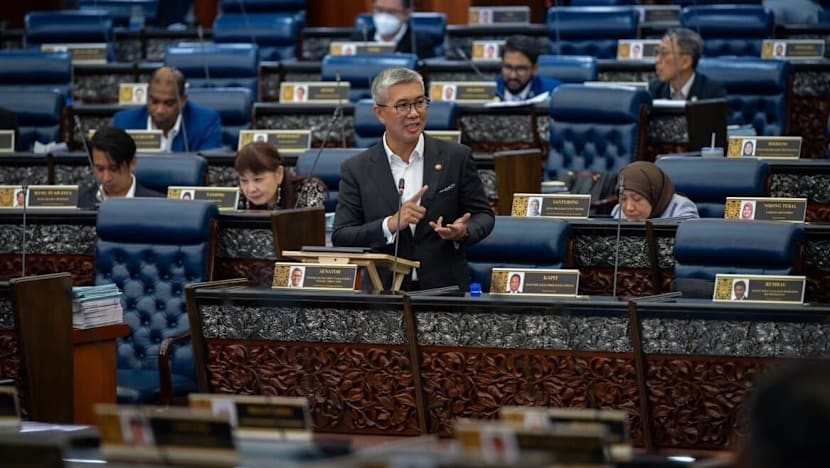
Former trade minister Tengku Zafrul Abdul Aziz on his last day in the Dewan Rakyat. (Photo: Instagram/@tzafrul_aziz)

Meanwhile, like Rafizi, Nik Nazmi had resigned following defeat in party elections within PKR.

Second Finance Minister Amir Hamzah took over the economy portfolio in the interim while Johari Ghani helped to handle natural resources and environment sustainability.

Ewon’s former portfolio was being managed by works minister Alexander Nanta Linggi starting Dec 3, local media reported.

https://blogger.googleusercontent.com/img/a/AVvXsEjYEqgqEpmTD03c4BAb9mHp2PpVknhgbLa_OW3ZcfXdMe_cdMdZwYGtqj0-eqpGQVh6kfEdYPIm4_ZbMV7XIT9GbOWPjY2DPzPHHFSchEQyw9cpwvdr2RlfNrP5cal_X8nyk22R77vR2eQrAovbzVXTCfdiRwx6qoWO4zoTtXeF0zTGgYGtr1RWPMb-tW0" style="margin-left: 1em; margin-right: 1em;">
Malaysia Prime Minister Anwar Ibrahim shows a list of his Cabinet appointments after announcing a reshuffle on Dec 16, 2025. (Photo: Prime Minister’s Office of Malaysia/Afiq Hambali)

KUALA LUMPUR: Malaysian Prime Minister Anwar Ibrahim announced sweeping changes to his Cabinet on Tuesday (Dec 16), ending weeks of speculation over ministerial vacancies.

Notable changes - among more than 25 announced - include the appointments of United Malays National Organisation (UMNO) stalwart Johari Ghani as the new Investment, Trade and Industry Minister and Parti Keadilan Rakyat’s (PKR) Akmal Nasir as Economy Minister. There are 65 Cabinet posts in total. 

Johari was previously Minister for Plantations and Commodities while Akmal was Deputy Minister of Energy Transition and Water Transformation. 

A composite image of newly-appointed investment, trade and industry minister Johari Ghani (left) and economy minister Akmal Nasir (right). (Photos: Facebook/Johari Abdul Ghani, Facebook/Akmal Nasir)

During the internal PKR polls in May, Akmal was seen as closely aligned to Rafizi Ramli, who resigned as Economy Minister after he was defeated by Anwar’s daughter Nurul Izzah in a contest to be the party’s deputy president. 

UMNO is an ally of Anwar’s Pakatan Harapan (PH) ruling coalition, and the investment, trade and industry portfolio was previously held by Tengku Zafrul Aziz, who was an UMNO member before leaving the party to join the prime minister’s PKR. 

Malaysia Prime Minister Anwar Ibrahim held a meeting with Malaysian king Sultan Ibrahim Sultan Iskandar at Istana Bukit Tunku in Kuala Lumpur on Dec 16, 2025. (Photo: Facebook/Sultan Ibrahim Sultan Iskandar)

Speaking at the start of the press conference before he announced the changes, Anwar said: “There is a need to make some changes so that we have a Cabinet that works as a team, to focus on achieving higher economic growth and solving people's problems.” 

He had met the king Sultan Ibrahim Sultan Iskandar on Tuesday morning, and said in a Facebook post in the afternoon that he would make an announcement on the Cabinet at 3.30pm that day.

Among the changes he announced, Arthur Josep Kurup of the United Sabah People’s Party was appointed Natural Resources and Environmental Sustainability Minister, PKR vice-president R Ramanan was appointed Human Resources Minister while head of UMNO women’s wing Noraini Ahmad was appointed Minister for Plantations and Commodities. 

Democratic Action Party’s (DAP) Hannah Yeoh was reassigned from her Minister for Youth and Sports portfolio to be Minister in the Prime Minister’s Department (Federal Territories), with PKR’s Taufiq Johari taking her place.   

PKR’s Mustapha Mohd Yunus Sakmud was appointed Minister for Sabah and Sarawak while DAP’s Steven Sim was reassigned from his Human Resources portfolio to be Minister for Entrepreneur Development and Cooperatives. 

Senator and Islamic scholar Zulkifli Hasan was appointed Minister for Religious Affairs. 

The changes to Anwar’s Cabinet - including full minister and deputy minister positions - saw some members being reassigned while others were new appointments. 

Full ministers who were dropped completely from the line-up included PKR’s Zaliha Mustafa who was Minister in the Prime Minister’s Department (Federal Territories) and Minister for Religious Affairs Mohd Na’im Mokhtar. 

Na'im's exclusion was a surprise as he was sworn in as a senator for a second term on Dec 3. 

Notably, Malaysia's Education Minister Fadhlina Sidek retained her post despite facing criticism for her perceived lack of action and slow response on serious school issues like bullying, with student deaths triggering public outcry for her to resign. 

Earlier this month, three ministers were also sworn in as senators for a second term. Besides Na'im, they included Home Minister Saifuddin Nasution Ismail and Higher Education Minister Zambry Abdul Kadir. 

A minister in Malaysia must be an elected member of parliament (MP) in the lower house or an appointed senator in the upper house. 

On Dec 1, Anwar had said that a major reshuffle of his Cabinet is not on the cards, noting that his administration will “only function for a year plus” as Malaysia’s next general election is due by February 2028. 

However, there was speculation that changes to his Cabinet were imminent, with Tengku Zafrul stepping down from his Investment, Trade and Industry Minister portfolio earlier this month, creating a fourth ministerial vacancy. 

Tengku Zafrul had served for two terms as a senator since 2020. He held the trade minister post throughout his term in the Senate, which is the maximum period allowed.

Nik Nazmi Nik Ahmad had resigned as the Natural Resources and Environmental Sustainability Minister in May, while Ewon Benedick resigned as the Entrepreneur Development and Cooperatives Minister in November, ahead of the Sabah state elections.

Ewon had resigned over disagreements with the federal government on issues related to Sabah’s 40 per cent entitlement of federal net revenue derived from the state. 

Former trade minister Tengku Zafrul Abdul Aziz on his last day in the Dewan Rakyat. (Photo: Instagram/@tzafrul_aziz)

Meanwhile, like Rafizi, Nik Nazmi had resigned following defeat in party elections within PKR.

Second Finance Minister Amir Hamzah took over the economy portfolio in the interim while Johari Ghani helped to handle natural resources and environment sustainability.

Ewon’s former portfolio was being managed by works minister Alexander Nanta Linggi starting Dec 3, local media reported.